




 Industrial 4G N-Type Antenna –...
450 EGP
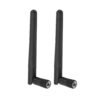
Industrial 4G N-Type Antenna – High-Gain Outdoor Omnidirectional Transceiver Array
In modern industrial and enterprise communication environments, maintaining a rock-solid, uninterrupted wireless data link is a fundamental requirement for operational continuity. The premium outdoor 4G N-Type Antenna from OHM Cables provides a highly engineered, commercial-grade solution designed to eliminate weak cellular signals, recurrent packet drops, and bandwidth bottlenecks. Whether you are integrating remote cellular backhauls, setting up mission-critical telemetry, or optimizing high-capacity gateways, this heavy-duty transceiver delivers an optimized $50 \Omega$ physical interface. By executing deep impedance balancing across its entire internal structure, it captures clean RF energy from distant cell towers and translates it into high-speed, stable data streams for your corporate or industrial infrastructure networks.
The standard indoor plastic antennas supplied with off-the-shelf consumer modems lack the mechanical and electrical properties required to penetrate complex structural barriers. When electronic gateways are locked deep inside dense concrete enclosures, subterranean basements, or mofussil manufacturing units, ambient signal attenuation increases dramatically, forcing modems into high block error rates and sluggish fallback states. Deploying our professional 4G N-Type Antenna on an exterior rooftop, structural riser, or dedicated utility mast completely bypasses these local environmental constraints. By elevating your point of reception into clear line-of-sight space, you establish an ultra-low-loss physical connection path that stabilizes enterprise routers and expands real-world operational coverage boundaries.

Professional RF Engineering Insight: High-frequency transmission paths are uniquely susceptible to insertion loss caused by loose couplings or low-mass connectors. Utilizing an industrial N-Type interface standard establishes a large, heavy-duty threaded union that delivers outstanding structural grounding, suppresses environmental intermodulation distortion, and handles higher transmission power loads compared to delicate, consumer-grade alternatives.
The Three Core Operational Roles of the 4G N-Type Antenna Array
An advanced network element must be engineered to fulfill multiple structural and electrical tasks simultaneously. The OHM Cables 4G N-Type Antenna goes beyond standard consumer components by performing three essential architectural roles within your enterprise wireless infrastructure:
1. The Architectural Signal Bridge: Breaking the Faraday Cage Effect
In modern production plants, automated warehousing hubs, and utility facilities, expensive cellular routers and terminal blocks are mounted inside thick, weather-shielded metal control boxes to prevent physical damage. However, this mechanical protection turns into an electrical disaster by creating a literal Faraday cage that blocks incoming radio waves. The primary role of our outdoor 4G N-Type Antenna is to act as a clear physical signal bridge. Installed outside on a high mast, it intercepts clean klystron and cellular emissions from the open sky and carries them straight through low-loss coaxial transmission lines (such as premium LMR400 or TZC500 cables) down to your indoor router cards, eliminating the dampening effects of indoor metal partitions.
2. The Multi-Tower Redundancy Anchor: 360-Degree Horizontal Tracking
Unlike directional yagi or panel antennas that must be precisely pointed at a single target carrier tower—making them vulnerable to immediate network downtime if that specific tower goes offline—this professional 4G N-Type Antenna acts as a flexible multi-tower fallback anchor. Engineered with a true, toroidal $360^\circ$ horizontal radiation pattern, it captures wireless signals from multiple regional cell towers simultaneously. This wide omnidirectional spread builds automatic redundancy directly into your network topology. If a primary carrier cell site undergoes sudden maintenance or suffers heavy localized peak-hour data congestion, your edge gateway can seamlessly lock onto secondary alternative towers without losing its live connection.
3. The Circuit Power Guardian: Extreme VSWR Suppression
When an incoming radio wave encounters an impedance mismatch or a poorly soldered junction inside a cheap component, a significant portion of that electrical energy is reflected backward along the transmission line as heat. This high return loss degrades the overall Signal-to-Noise Ratio (SNR) and generates dangerous thermal feedback that can permanently destroy the delicate input boards of expensive industrial routers. The 4G N-Type Antenna fulfills the critical role of an electrical stabilizer. By enforcing a strict, factory-calibrated $50 \Omega$ match and maintaining a Voltage Standing Wave Ratio (VSWR) of $\le 1.5$ across its targeted bands, it ensures maximum forward power transfer while safeguarding your core electronics from unexpected voltage spikes.

Mechanical Anatomy and Materials: Engineering Resilience for Hostile Environments
A deep mechanical teardown of this industrial-grade 4G N-Type Antenna highlights the major structural differences between a professional-grade component and low-end retail copies. The internal radiator core consists of a stacked, multi-element dipole array meticulously crafted from pure, high-conductivity copper. Each segment length and internal spacing distance is mathematically tuned to align with specific worldwide cellular wavelengths. This allows the antenna to maintain excellent broadband efficiency across the full 4G LTE frequency range, from the low-band $698\text{ MHz}$ frequencies (which offer superior penetration through dense foliage and long-range reach in rural zones) up to the high-band $2700\text{ MHz}$ frequencies (which support fast data speeds and high capacity in metropolitan settings).
To shield this precise internal copper array from physical damage, the antenna is encased in a thick, heavy-walled fiberglass or UV-stabilized ABS radome. This rugged outer shell acts as an impenetrable barrier against environmental impacts while remaining completely RF-transparent. This means it allows high-frequency radio waves to pass through with near-zero dielectric absorption, preserving your signal strength over decades of continuous exposure. The base of the antenna features a heavy-duty, nickel-plated brass or marine-grade aluminum mounting collar that provides a rigid mechanical foundation capable of withstanding extreme wind speeds, preventing stress cracks in the internal solder joints.
Advanced Ingress Protection and IP67 Moisture Mitigation
Permanent outdoor installations require absolute protection against moisture ingress, which can corrode internal metals and ruin your signal line. The 4G N-Type Antenna features an IP67-rated waterproof build, using heavy-duty internal silicone O-rings to seal out driving rain, coastal salt fog, and fine airborne dust. The integrated N-Type Female connector is factory-bonded directly to the metal base using a high-pressure compression system, ensuring zero micro-gaps remain for moisture to seep into during rapid temperature shifts or freezing winter cycles.
Strategic Deployments Across Niche Commercial & Industrial Sectors
Thanks to its wide frequency response and durable, resilient design, the 4G N-Type Antenna is the top choice for network engineers and system integrators across many demanding sectors, including:
- SCADA & Industrial Telemetry Systems: Securing reliable, real-time data monitoring links for remote oil and gas pipelines, automated water treatment plants, and smart electrical grids where connection drops are not an option.
- Smart Warehousing & Fulfillment Centers: Ensuring smooth, constant wireless coverage for Automated Guided Vehicles (AGVs), automated forklifts, and scanning systems that rely on instant data syncing to prevent workflow delays.
- Corporate Failover Networks: Providing high-speed, reliable alternative internet paths for banks, data centers, and corporate offices, ensuring immediate cellular backup if a primary fiber-optic cable is accidentally cut.
- Maritime & Coastal Infrastructure: Upgrading signal reception for commercial shipping vessels, luxury yachts, and offshore drilling platforms where components must endure relentless salt spray and high humidity.
- Precision Agriculture & Irrigation: Linking widespread environmental sensors, autonomous tractors, and remote irrigation controls back to a central farm management system over miles of open fields.
Precision N-Type Interface: The Gold Standard for High-Frequency Systems
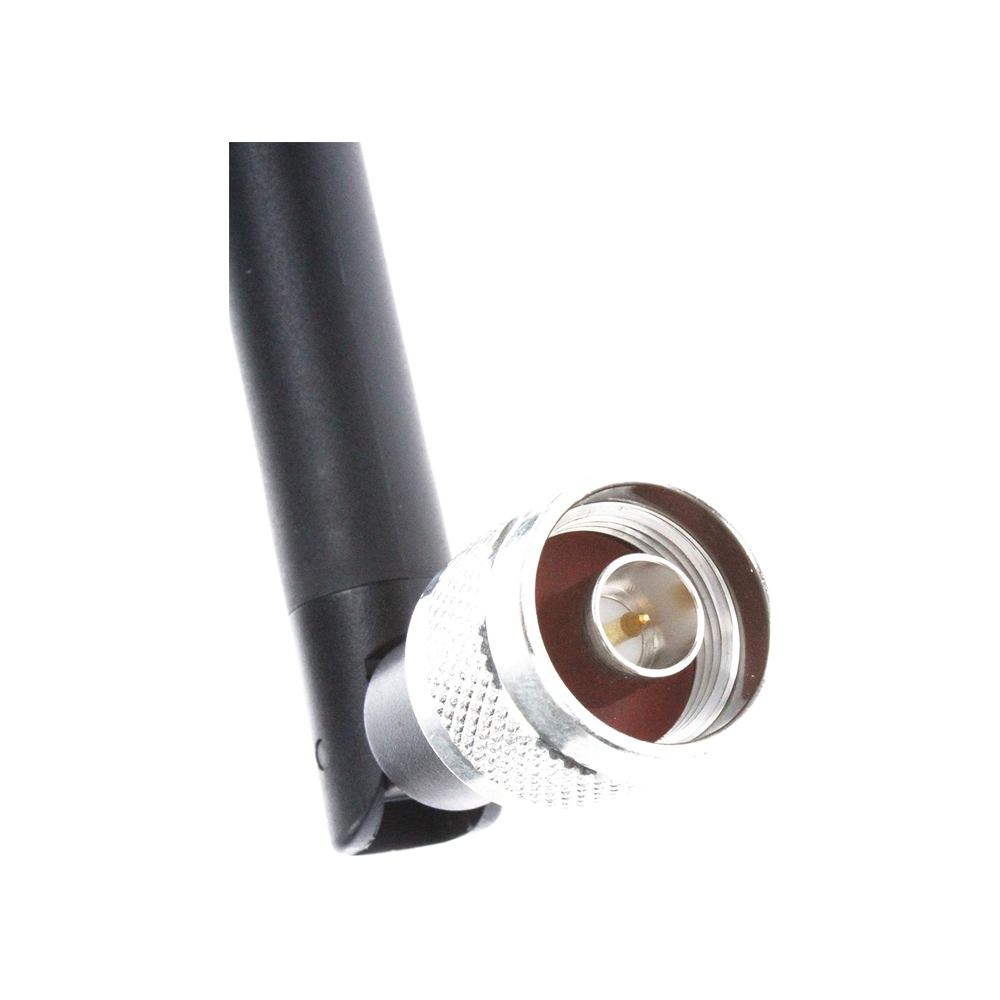
Choosing an N-Type interface for this industrial antenna is a deliberate design choice focused on long-term field reliability. The N-Type connector features a thick, heavy, deeply threaded body that locks tightly into place, completely preventing the physical loosening or shifting common with smaller consumer fittings when exposed to high-wind vibration or industrial equipment movement. The internal center mating pin is machined from premium beryllium copper and heavily plated with gold to reduce electrical contact resistance and prevent surface oxidation over long lifetimes.
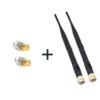
The integrated N-Type Female bulkhead built into the antenna base makes it easy to integrate with a wide range of professional low-loss cables. For setups that require connecting to a router using smaller SMA ports, the antenna can be easily paired with heavy-duty low-loss adapter cables (like N-Male to SMA-Male lines). This approach provides a clean, secure physical path with minimal mating points, protecting the integrity of your overall signal chain.
| Technical Parameter | Engineering Specification Value & Design Alignment |
|---|---|
| Product Standard Model | 4G N-Type Antenna (Industrial Wideband Outdoor Omnidirectional Radome) |
| Supported Frequency Spectrum | 698 MHz – 960 MHz & 1710 MHz – 2700 MHz (Full 4G LTE/3G Bandwidth) |
| Characteristic Impedance | $50 \Omega$ Nominal (Perfect Match for Enterprise Telecom Systems) |
| Voltage Standing Wave Ratio (VSWR) | $\le 1.5$ Typical Across Targeted Bands (Minimal Signal Reflection) |
| Radiation Pattern Profile | 360° Horizontal Omnidirectional Toroid (Multi-Tower Capture) |
| Connector Interface Standard | N-Type Female Bulkhead (Heavy-Duty Threaded Base) |
| Radome Material Composition | Fiberglass / UV-Stabilized Weatherproof ABS (Zero RF Absorption) |
| Ingress Protection Rating | IP67 Certified Dustproof and Waterproof Seal |
| Operational Temperature Window | -40°C to +85°C Sustainable Window (Extremes of Desert and Artic) |
| Included Mounting Assemblies | Heavy-Duty Stainless Steel U-Bolt Mast Clamp Kits Set |
Managing Coaxial Cable Attenuation: Understanding the Laws of RF Physics
A fundamental law of radio frequency physics states that signal attenuation increases as operating frequencies rise and as transmission cables grow longer. To get the most out of your high-gain 4G N-Type Antenna, you must carefully select the right coaxial cables for your installation. Using cheap, thin consumer wires like RG174 over long distances will quickly erase the decibel gains achieved by the antenna, turning a clean cellular signal into weak background noise. For cable runs extending past a few feet, we highly recommend using thick, double-shielded, low-loss cables like LMR400 or TZC500 to preserve your signal strength.
Proper cable routing also means avoiding sharp, tight bends. Bending a high-frequency coaxial cable at a sharp 90-degree angle crushes its internal dielectric layer and disrupts its uniform $50 \Omega$ impedance, creating a significant signal reflection point that degrades data speeds and increases network latency (Ping). Keeping your cable runs as straight as possible and using premium materials ensures that every decibel of signal captured by the outdoor 4G N-Type Antenna arrives intact at your router, delivering the fast upload and download speeds your operations depend on.
Field Installation Best Practices for Network Technicians
- Maximize Vertical Elevation: Mount the antenna at the highest practical point on your roof or mast, ensuring it sits at least one meter away from large metal objects, air conditioning units, or power lines to protect its 360-degree omnidirectional capture pattern.
- Ensure Correct Vertical Polarization: Because commercial cell towers broadcast using vertical wave polarization, make sure the 4G N-Type Antenna cylinder is mounted perfectly straight up and down. Mounting it at an angle will cause a significant loss in cross-polarization efficiency.
- Install Inline Surge Protection: Always mount a $50 \Omega$ lightning surge arrestor inline between the antenna base and the building entry point. Run a thick copper ground wire from the arrestor straight to a dedicated earth ground rod to protect your internal network hardware from static buildup and nearby lightning strikes.
- Apply Multi-Layer Weatherproofing: Once the N-Type connection is firmly tightened by hand, wrap the entire junction with self-amalgamating rubber tape, followed by a protective outer layer of premium vinyl electrical tape. This creates a solid, watertight seal that completely blocks out rain and humidity.
- Create a Dedicated Drip Loop: Form a small downward curve in the coaxial cable right before it enters the building wall. This simple loop forces rainwater to drip safely onto the ground rather than running along the cable into your building or electronic ports.
Why Upgrading to Industrial Hardware Is a Smart Long-Term Investment
When calculating the true cost of network infrastructure, opting for cheap, uncertified components often proves to be an expensive mistake. A single dropped connection or data dropout in an automated factory, or a sudden loss of video feed at a remote security post, can cause costly operational delays that far outweigh the initial savings of a cheaper antenna. Investing in our high-performance 4G N-Type Antenna means choosing long-term operational stability, steady data throughput, and reliable protection for your expensive networking equipment.
At our production facilities, we enforce strict quality control protocols across every assembly line. Each individual antenna undergoes rigorous testing using advanced Vector Network Analyzers (VNA) to confirm accurate $50 \Omega$ matching, flawless internal soldering, and optimal VSWR performance before it is packaged and shipped. We know that the reliability of our products directly affects the success of your business, which is why we never compromise on our electrical or mechanical standards. We focus on delivering professional, field-tested components you can rely on for your most critical network deployments.
Frequently Asked Technical Questions (FAQ)
Can this 4G N-Type Antenna be used on newer 5G network bands?
Yes, this antenna is fully compatible with low-band and mid-band Sub-6 GHz 5G networks that operate within its $698\text{ MHz}$ to $2700\text{ MHz}$ range. This frequency block includes the foundational wide-area coverage bands utilized by major cellular carriers worldwide for their 5G network rollouts.
Will mounting this antenna close to a 2.4 GHz WiFi router cause network interference?
While 2.4 GHz WiFi frequencies sit near the upper end of this antenna’s frequency range, its internal copper dipole layout provides good natural isolation against cross-band distortion. As a standard engineering best practice, we recommend leaving a physical clearance distance of at least 1.5 to 2 meters between your outdoor cellular antenna and any nearby WiFi access points to prevent local receiver desensitization.
Does this antenna require a flat metal sheet to act as an electrical ground plane?
No, this premium 4G N-Type Antenna is engineered as a ground-plane-independent dipole array. Unlike older antenna designs that must be mounted on a large metal surface to function correctly, our antenna delivers its full rated gain and uniform 360-degree coverage whether mounted on a fiberglass pole, a wooden structure, or a standard metal mast.
How do I choose the correct cable length without losing too much signal?
Your cable choice should match the length of the run. For short distances under 10 feet, flexible cables like RG58 are perfectly fine. For longer industrial runs extending between 15 and 50 feet, it is essential to use premium, ultra-low-loss cables like LMR400 to keep signal attenuation to an absolute minimum.
Final Verdict for Infrastructure Systems Engineers
Building a high-performance, dependable wireless network requires avoiding low-quality consumer parts and temporary quick fixes. The OHM Cables 4G N-Type Antenna array offers the rugged weatherproofing, reliable $50 \Omega$ impedance stability, and wideband coverage needed to keep your critical data flowing in demanding environments. To complete your network installation, explore our full catalog of premium Coaxial Cable Assemblies and industrial RF Connectors. You can also review international telecommunication design standards by visiting the IEEE Official Resource Center to learn more about optimizing high-frequency RF layouts. Upgrade your network infrastructure with this reliable outdoor antenna today, and experience the rock-solid connection stability your system was built to deliver.
Related products




You may add any content here from XStore Control Panel->Sales booster->Request a quote->Ask a question notification
At sem a enim eu vulputate nullam convallis Iaculis vitae odio faucibus adipiscing urna.
Reviews
There are no reviews yet.